> For the complete documentation index, see [llms.txt](https://docs.emaildelivery.com/docs/llms.txt). Markdown versions of documentation pages are available by appending `.md` to page URLs; this page is available as [Markdown](https://docs.emaildelivery.com/docs/advanced-postal-route-configuration/contact-list-domain-routing.md).
# Contact list domain routing
Contact list domain routing serves two functions in postal route configuration:
{% hint style="info" %}
**Grouping**
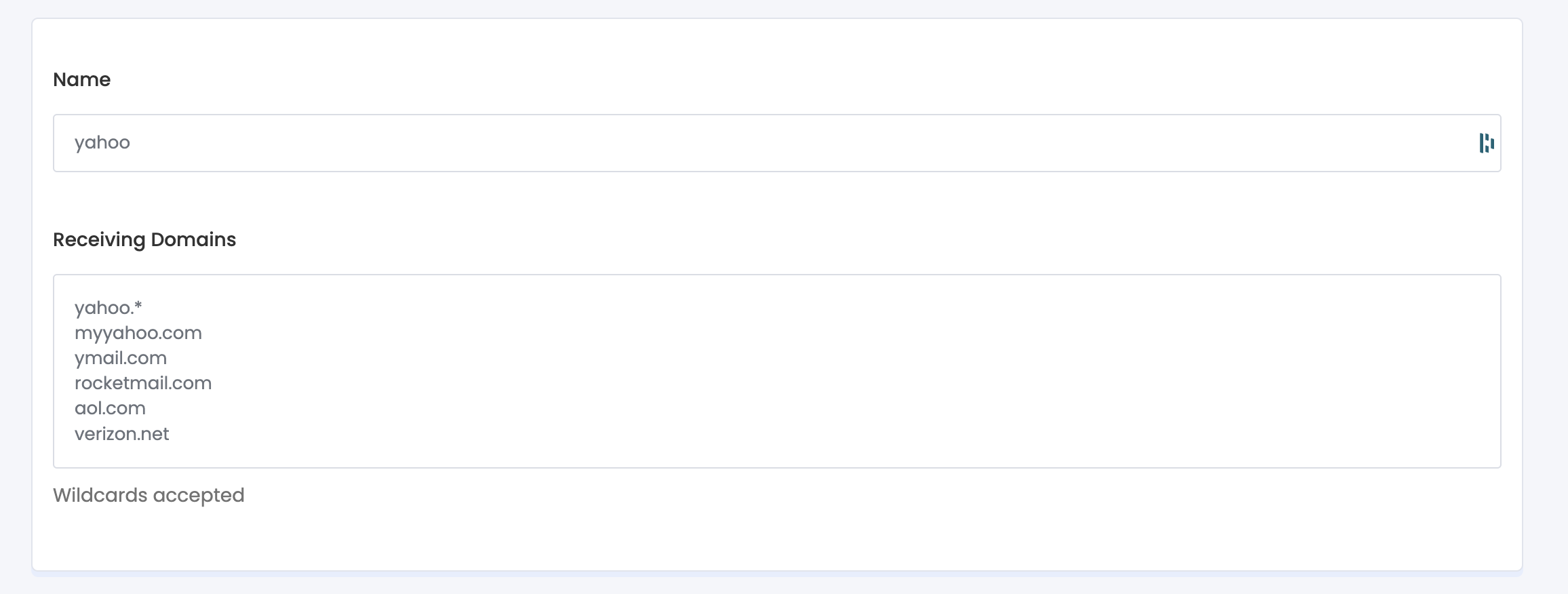
Logically group domains owned by the same parent company that share a common email infrastructure, such as the merger of Yahoo, AOL, and Verizon.
{% endhint %}
{% hint style="info" %}
**Isolating**
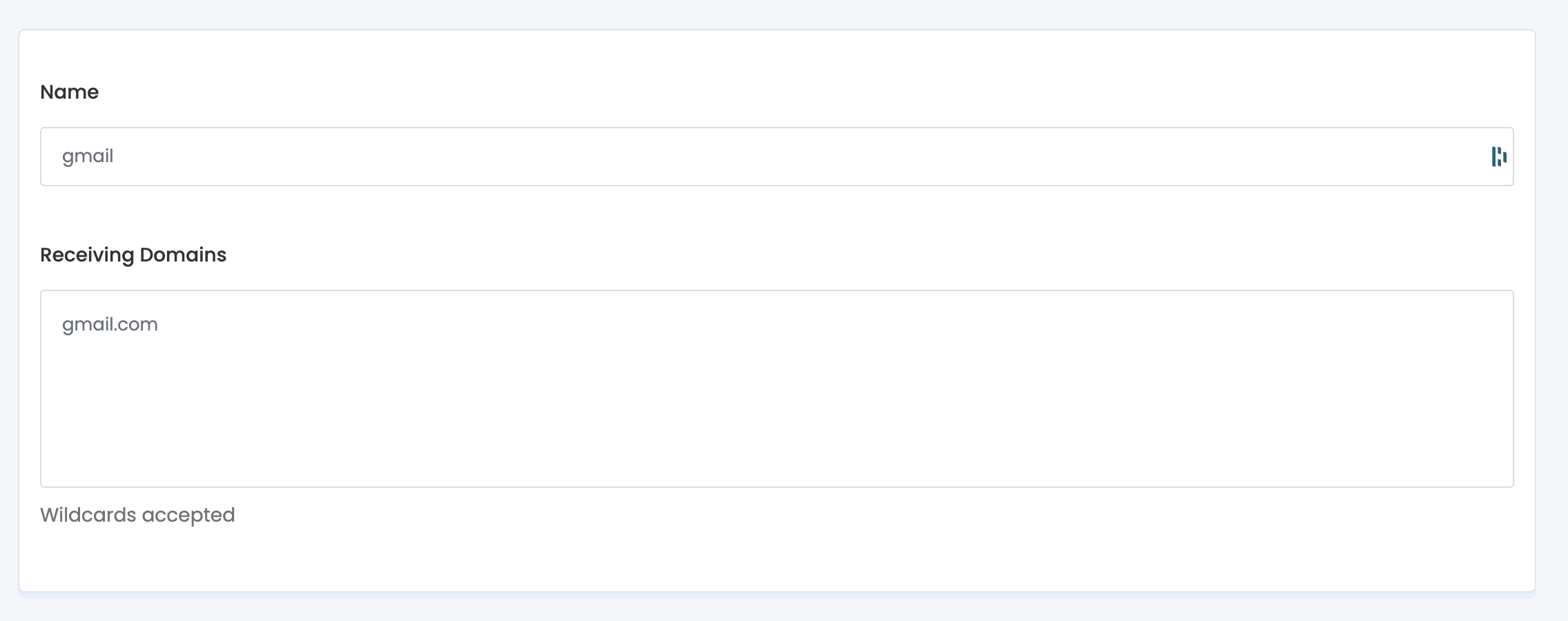
Routing the most important mailbox providers like Gmail through the API, SMTP Relay, or MTA delivery policy where you're getting the best deliverability\*.
{% endhint %}
{% hint style="success" %}
**\***Delivery is when a message is successfully delivered, Deliverability is when the message hits the inbox.
{% endhint %}
Logical grouping example from the portfolio of Yahoo domains:
Microsoft email domains:
Preparing to isolate delivery for Gmail contacts via an optimized postal route connection: